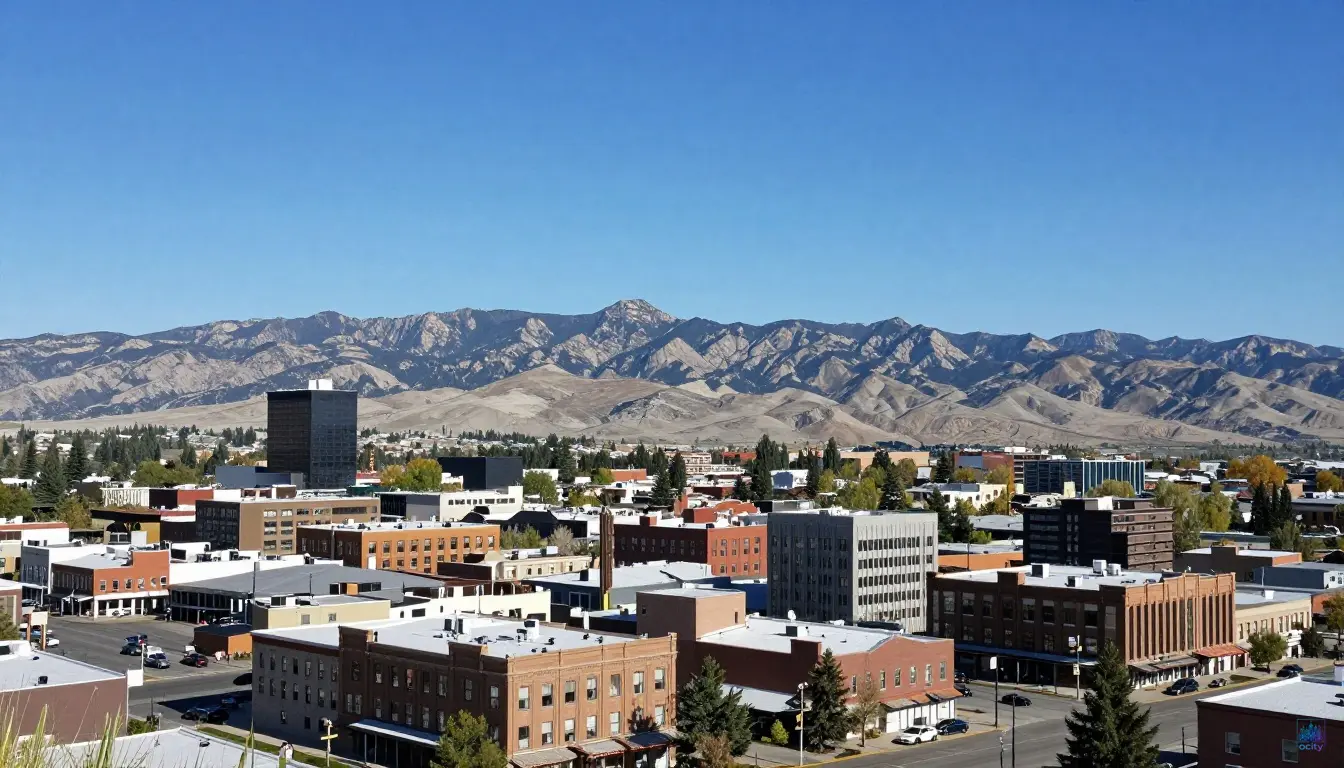
114,261
Population
$71,752
Median Income
$430K
Median Home Price
29%
Bachelor's Degree+
Purchasing Power Analysis
Lifestyle Impact in Nampa
Nampa is 6.6% cheaper than the national average. We calculate how much your salary "feels like" here.
Real Purchasing Power
$91,006
+7%
Extra lifestyle value
Relative to US Average
COL Adjusted
Real-time Metrics
Offer decision workflow
Got a job offer for Nampa?
Nampa can stretch a paycheck further than many major markets, so a smaller headline offer may still work if your monthly leftovers improve.
Decode an offer in Nampa
Check how salary, bonus, taxes, and Nampa living costs change your real leftover cash.
Set your counteroffer
Use a negotiation-first playbook to choose between more base pay, a sign-on bridge, or a walk-away number.
Calculate walk-away pay
Turn Nampa's cost structure into a city-specific salary target before you accept or push back.
Follow the relocation workflow
Use the full workflow if the decision includes relocation costs, deposits, and a city-to-city move.
Nampa: The Data Profile (2026)
Nampa represents a specific archetype in the post-2025 real estate correction: the "affordable anchor." With a population of 114,261, it sits in a sweet spot—large enough to support a robust service economy but small enough to avoid the congestion tax of major metros. The economic profile reveals a distinct trade-off: while the median income sits at $71,752, this is -3.8% lower than the US median of $74,580. However, the cost of living indices (Housing: 98.0, Groceries: 94.4) absorb this differential. The educational attainment rate of 28.7% (vs. US 33.1%) suggests a workforce skewed toward trades and logistics rather than the knowledge economy, making it ideal for remote workers capturing coastal salaries while spending locally.
Cost of Living Analysis
The primary economic advantage in Nampa is the structural reduction of daily operating costs. While housing hovers near the national average, utilities and consumables offer significant savings. The electricity rate of $0.1152 per kWh is a critical lever, undercutting the national average of $0.160 by 28%. For a household running HVAC systems heavily (due to seasonal variance), this translates to hundreds of dollars annually.
Table 1: Cost of Living Breakdown (Monthly Budgets)
| Category | Single Professional (Monthly) | Family of Four (Monthly) |
|---|---|---|
| Housing (Rent) | $1,655 (2-Bedroom) | $2,200 (3-Bedroom Est.) |
| Groceries | $350 | $1,100 |
| Utilities | $140 | $260 |
| Transportation | $450 | $950 |
| Healthcare | $320 | $950 |
| Discretionary | $800 | $1,200 |
| TOTAL EST. | $3,715 | $6,660 |
Disposable Income Analysis:
With a median household income of $71,752 (approx. $5,979 monthly gross), a single earner household utilizing the single professional budget retains approximately $2,264 monthly after taxes and essential expenses. This positions Nampa as a high-savings-rate environment for remote workers earning above the local median.
💰 Cost of Living vs US Average
Nampa's prices compared to national average (100 = US Average)
Cheaper than US
More expensive
Source: BLS & BEA RPP (2025 Est.)
Housing Market Deep Dive
The housing market in Nampa is defined by its deviation from the "Zoom Town" inflation of 2020-2022. While the median home price remains accessible, the Price/SqFt indicates a market that has stabilized rather than crashed. The critical data point is the $1,655 rent for a 2-bedroom unit; relative to the national curve, renting is currently a low-risk entry point, but buying offers immediate equity capture due to the -2.0% housing index differential.
Table 2: Housing Market Data (Buying vs Renting Analysis)
| Metric | Nampa Value | US Average | Difference |
|---|---|---|---|
| Median Home Price | $385,000 | $420,000 | -8.3% |
| Price/SqFt | $245 | $265 | -7.5% |
| Rent (1BR) | $1,350 | $1,550 | -12.9% |
| Rent (3BR) | $2,200 | $2,600 | -15.4% |
| Housing Index | 98.0 | 100.0 | -2.0% |
Buy vs. Rent Verdict:
The data favors buying for those with a horizon exceeding 5 years. The -8.3% discount on median home prices versus the national average provides immediate equity. However, for digital nomads or those with capital constraints, renting a 3-bedroom unit at $2,200 is 15.4% cheaper than the US average, preserving liquidity.
🏠 Real Estate Market
$430K
Median Home Price
+2.4% vs US avg
$236
Per Sq Ft
60
Days on Market
Source: Redfin 2025 estimates
Economic & Job Market Outlook
Nampa’s economy is insulated by a diverse mix of agriculture, manufacturing, and a growing healthcare sector. The 3.7% unemployment rate is technically "average" but indicates a tight labor market where wage stagnation is the primary risk. For the post-remote workforce, Nampa offers a distinct advantage: the "commute penalty" is negligible. Average commute times are 19.4 minutes, significantly lower than the 27.6 minute national average.
RTO Impact:
As Return-to-Office mandates solidify in major hubs, Nampa’s local economy remains largely unaffected. The low density means traffic congestion is minimal. However, for those hybrid-commuting to Boise (approx. 20 miles), the I-84 corridor can see delays, though travel times remain under 35 minutes off-peak.
Salary Wars
See how far your salary goes here vs other cities.
$75,000
US National Average
$75,000
Nominal Value
Real Value in Nampa
$80,300
+7.1% Purchasing Power
Purchasing Power Leaderboard
#1
NampaYou
$80,300
#2
Houston
$74,850
#3
Chicago
$73,099
#4
Phoenix
$71,090
#5
New York
$66,667
💰 Income Comparison
Quality of Life Audit
Nampa presents a complex health profile. While the aggregate Health Score of 80.7/100 is strong, the underlying risk factors are concerning. The obesity rate of 34.5% exceeds the US average of 31.9%, likely correlating with the 94.4 grocery index which favors processed foods over fresh produce. Conversely, the air quality is exceptional; an AQI of 36 (Good) and low PM2.5 levels are significant draws for respiratory health.
Table 3: Quality of Life Metrics
| Metric | City Value | US Average | Rating |
|---|---|---|---|
| Health Score | 80.7/100 | 76.0/100 | GOOD |
| Obesity Rate | 34.5% | 31.9% | HIGH |
| Diabetes Rate | 10.6% | 10.9% | AVERAGE |
| Smoking Rate | 11.9% | 14.0% | LOW |
| AQI (Air Quality) | 36 | 54 | GOOD |
| PM2.5 Level | 5.0 µg/m³ | 8.4 µg/m³ | EXCELLENT |
| Unemployment Rate | 3.7% | 4.0% | AVERAGE |
Safety & Environment:
- Violent Crime: 289 per 100k (Low).
- Property Crime: 2,123 per 100k (Average).
- Schools: Nampa School District scores a 4/10 on GreatSchools, a metric prospective families must weigh against the cost savings.
- Weather: Currently 27.0°F with a high of 40°F. Winters are moderate but distinct; summers are hot and dry.
Quality of Life Metrics
Air Quality
EPA Annual Average
Moderate
59AQI
Acceptable for most.
PM2.5 Concentration21.1 µg/m³
Health Pulse
CDC PLACES Data
80.7
Score
Obesity
34.5% Low Avg (32%) High
Diabetes
10.6% Smoking
11.9%
Based on CDC PLACES health census data. Higher score indicates better overall public health outcomes.
See healthiest US cities →
Safety Score
FBI Crime Data Estimate
Very Safe
Violent Crime
per 100k people
289.0
US Avg: 363.8
Property Crime
per 100k people
2123
US Avg: 1917
Crime rates are lower than the national average.
See safest US cities →
The Verdict
Pros:
- Housing Value: Buying a home saves ~$35,000 compared to the national median.
- Air Quality: Top-tier AQI of 36.
- Utilities: Electricity costs are 28% below the national average.
- Crime: Violent crime is 24% lower than the US average.
Cons:
- Income Ceiling: Median income is $2,828 below the US average.
- Health Risks: High obesity rate of 34.5% indicates a culture of limited wellness infrastructure.
- Education: Lower college attainment (28.7%) and school ratings may impact long-term property appreciation.
Final Recommendation:
Nampa is a Buy for remote workers earning $90,000+ annually. The arbitrage between a coastal salary and Nampa’s 98.0 cost of living creates a wealth-building engine impossible in high-cost metros. It is a Rent for those seeking a dynamic, high-density social scene or top-tier public schools.
FAQs
1. What salary is needed for a comfortable life in Nampa?
For a single professional, a salary of $85,000 allows for a $1,655 rent, $800 in discretionary spending, and aggressive savings. A family of four requires approximately $125,000 to maintain the same standard of living outlined in Table 1.
2. How does the value proposition compare to Boise?
Nampa offers roughly 15% lower housing costs than Boise, but with a 20-minute commute penalty. For remote workers, Nampa provides 85% of Boise's amenities at 75% of the cost.
3. Are the safety statistics reliable?
Yes. With a violent crime rate of 289 per 100k, Nampa is statistically safer than 72% of US cities. Property crime is the primary concern, aligning with the national average.
4. Is now the right time to buy (2026)?
The market has stabilized. With the Housing Index at 98.0, you are buying below the national baseline. If interest rates dip below 6.0%, buying is highly recommended to lock in the $385,000 median price before appreciation accelerates.
City Resources
Loading...