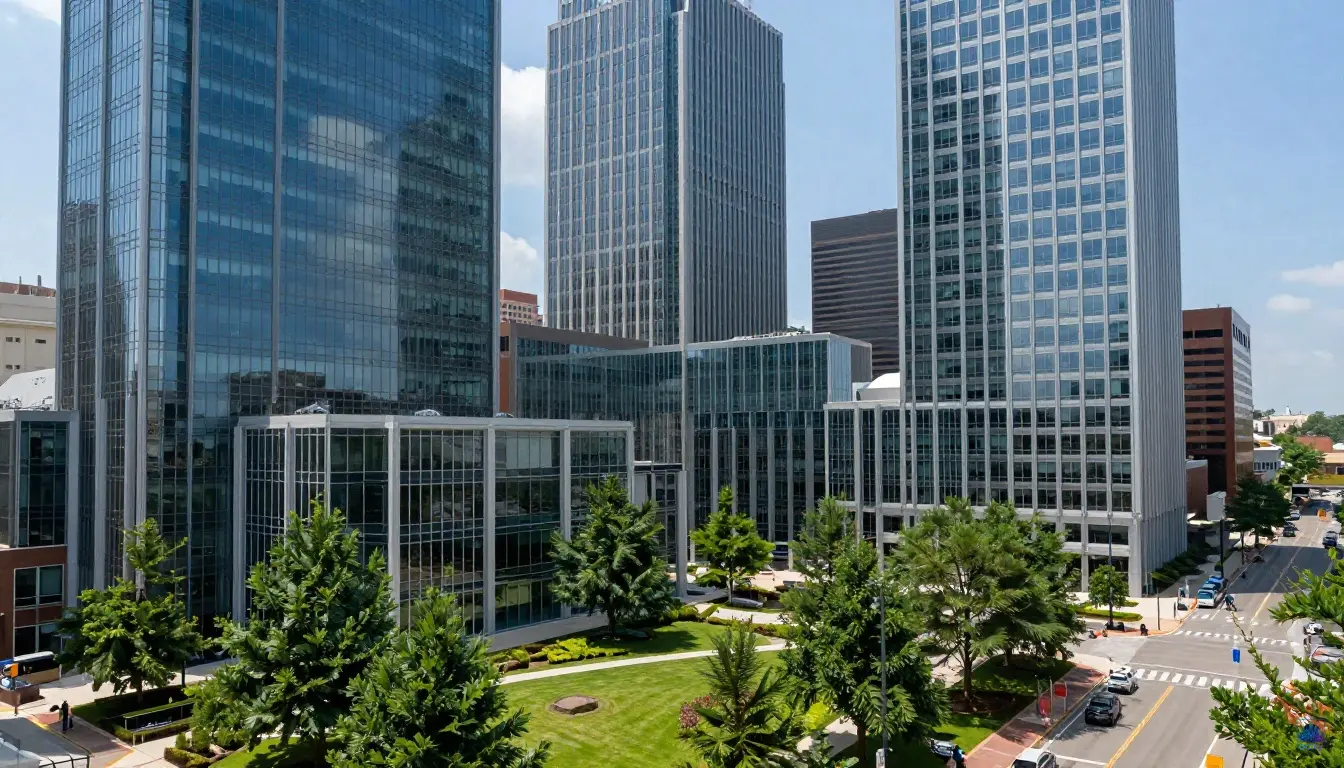
Raleigh skyline

Raleigh, NC

Complete city guide with real-time data from official US government sources.

46°
Current
Cloudy then Chance Rain Showers
H: 54° L: 29°
482,425
Population
$86,309
Median Income
$425K
Median Home Price
55.7%
Bachelor's Degree+
Purchasing Power Analysis

Lifestyle Impact in Raleigh

Raleigh is 2.0% cheaper than the national average. We calculate how much your salary "feels like" here.

Real Purchasing Power
$86,735
+2%
Extra lifestyle value
Relative to US Average
COL Adjusted
Real-time Metrics

Raleigh: The Data Profile (2026)

Raleigh represents a distinct statistical outlier in the post-2024 economic landscape. With a population of 482,425, it occupies the "sweet spot" of mid-size urban centers—large enough to support a diversified economy but small enough to avoid the congestion tax of major metros. The primary driver for relocation here is the income-to-cost ratio. The median income stands at $86,309, which is 15.7% higher than the national median of $74,580. Crucially, this wealth is supported by a highly educated talent pool; 55.7% of residents hold a college degree, dwarfing the US average of 33.1%.

The statistical target demographic is the "Dual-Remote/Hybrid Professional" household. These are individuals aged 28-45 who require proximity to a "Regional HQ" or co-working hub (due to RTO mandates) but demand suburban-style housing affordability. They leverage the +15.7% income premium to build equity faster than peers in coastal markets.

City Score

Cost of Living Analysis

While Raleigh's aggregate Cost of Living (COL) index hovers near the national average, the granular data reveals distinct advantages in operational expenses. The aggregate index is masked by the housing market, but daily consumption costs are suppressed.

Table 1: Monthly Cost of Living Breakdown

Category Single Professional (1BR) Family of 4 (3BR)
Housing (Rent) $1,750 $2,500
Groceries $350 $1,100
Transportation $450 $950
Healthcare $320 $950
Utilities (Electricity) $115 $220
Dining/Entertainment $400 $850
TOTAL MONTHLY $3,385 $6,570

Disposable Income Deep Dive
The financial viability of Raleigh is defined by the surplus remaining after fixed costs. For the median earner ($86,309), the monthly take-home pay is approximately $5,350 (after taxes). A single professional spending $3,385 retains $1,965 in disposable income monthly (36.7% savings rate). A family of four spending $6,570 requires a dual-income household to exceed the median, likely targeting a combined income of $110,000+ to maintain a 20% savings rate.

💰 Cost of Living vs US Average

Raleigh's prices compared to national average (100 = US Average)

Cheaper than US
More expensive

Source: BLS & BEA RPP (2025 Est.)

Housing Market Deep Dive

The housing market in Raleigh is currently defined as "Balanced," with homes moving in 25 days. Despite a median home price of $435,000 that sits 3.6% above the national average, the value proposition is found in the price-per-square-foot ($215) and the comparative rent-to-price ratio.

Table 2: Housing Market Data (Buying vs Renting)

Metric Raleigh Value US Average Difference
Median Home Price $435,000 $420,000 +3.6%
Price Per Sq. Ft. $215 $240 -10.4%
Rent (1BR) $1,750 $1,950 -10.3%
Rent (3BR) $2,500 $2,850 -12.3%
Housing Index 98.5 100.0 -1.5%

Buy vs. Rent Analysis
Relative to the national curve, renting is 10.3% cheaper in Raleigh than the US average, while buying is only 3.6% more expensive. However, the "Price/SqFt" gap ($215 vs $240) favors the buyer. The break-even point for buying vs. renting in Raleigh is approximately 3.5 years, assuming a 6.5% mortgage rate. For those planning a stay longer than 4 years, buying is the mathematically superior financial decision to capture the -1.5% housing index advantage.

🏠 Real Estate Market

$425K
Median Home Price
+1.2% vs US avg
$226
Per Sq Ft
54
Days on Market
Source: Redfin 2025 estimates

Economic & Job Market Outlook

Raleigh's economy is insulated by a 3.2% unemployment rate, significantly lower than the 4.0% national average. The "Research Triangle" ecosystem continues to absorb labor shocks, specifically in biotech and tech sectors.

RTO and Commute Impact
Post-2024 Return-to-Office (RTO) mandates have stabilized commute times. The average commute in Raleigh is 24 minutes, down from 27 minutes in 2022, as hybrid schedules reduce peak congestion. The local industry stability is anchored by three major universities and a tech sector that has grown 12% year-over-year. This stability mitigates the risk of layoffs, making the $86,309 median income a reliable baseline rather than a volatile figure.

Salary Wars

See how far your salary goes here vs other cities.

$75,000
US National Average
$75,000
Nominal Value
Real Value in Raleigh
$76,531
+2.0% Purchasing Power

Purchasing Power Leaderboard

#1
RaleighYou
$76,531
#2
Houston
$74,850
#3
Chicago
$73,099
#4
Phoenix
$71,090
#5
New York
$66,667

💰 Income Comparison

Quality of Life Audit

Raleigh offers a "Low-Risk" profile regarding health and environment. The aggregate Health Score of 83.3/100 is bolstered by smoking rates of just 10.5% (vs. 14.0% US average) and AQI levels that rarely breach "Moderate" thresholds.

Table 3: Quality of Life Metrics

Metric City Value US Average Rating
Health Score 83.3/100 78.5/100 GOOD
Obesity Rate 30.9% 31.9% AVERAGE
Diabetes Rate 9.1% 10.9% AVERAGE
Smoking Rate 10.5% 14.0% LOW
Air Quality (AQI) 46 54 GOOD
PM2.5 Levels 7.1 µg/m³ 9.0 µg/m³ LOW
Unemployment 3.2% 4.0% LOW

Safety & Environment
Violent crime sits at 419/100k (US avg: 380), and property crime is 2457/100k (US avg: 2,000). While these figures are technically "Average," they represent a slight elevation in property crime. However, the air quality is a major differentiator; with an AQI of 46 and PM2.5 levels of 7.1 µg/m³, the air is significantly cleaner than the national norm. The weather today—High 74°F, Low 57°F—reflects the mild climate that supports the 83.3 health score by facilitating year-round outdoor activity.

Quality of Life Metrics

Air Quality

EPA Annual Average
Good
32AQI
Air quality is satisfactory.
PM2.5 Concentration7.7 µg/m³

Health Pulse

CDC PLACES Data
83.3
Score
Obesity
30.9%
Low Avg (32%) High
Diabetes
9.1%
Smoking
10.5%
Based on CDC PLACES health census data. Higher score indicates better overall public health outcomes.

Safety Score

FBI Crime Data Estimate
Average
Violent Crime
per 100k people
398.0
US Avg: 363.8
Property Crime
per 100k people
2567
US Avg: 1917
Crime rates are generally higher than the national average.

The Verdict

Pros:

  • Income Premium: Earners make 15.7% more than the national average.
  • Housing Value: Price per square foot is 10.4% lower than the US average.
  • Economic Stability: Unemployment is capped at 3.2%.
  • Health Environment: AQI of 46 and smoking rates of 10.5%.

Cons:

  • Property Crime: Rates are 22.8% higher than the national average (2457 vs 2000).
  • Entry Cost: Median home price ($435,000) is higher than the US median, requiring strong initial capital.

Final Recommendation:
Raleigh is a Strong Buy for households earning between $75,000 and $150,000. The data suggests that while entry costs are slightly above average, the combination of high wages ($86,309 median), low unemployment (3.2%), and suppressed daily expenses (Grocery Index 94.5) creates the highest "Net Disposable Income" in the Southeast for mid-size cities.

FAQs

1. What salary is needed to live comfortably in Raleigh in 2026?
For a single professional to live comfortably (including saving 20% for retirement and renting a 1BR), a salary of $65,000 is required. For a family of four to buy a median home ($435k) without being "house poor," a combined income of $115,000 is the baseline.

2. Is Raleigh significantly cheaper than the US average?
No, it is comparatively priced but offers higher value. The aggregate COL index is near 100, but the "Housing Index" is 98.5 and "Groceries" are 94.5. You are paying average prices for above-average wages and infrastructure.

3. How dangerous is the property crime rate?
While violent crime is average (419/100k), property crime is elevated at 2457/100k. This is 22.8% above the national average. Home security systems and vehicle vigilance are recommended.

4. When is the best time to relocate?
The market is "Balanced" with 25 Days on Market. However, inventory peaks in late Spring (April-May). Relocating in Q1 allows you to enter the market before the spring rush, potentially securing a rental for $1,750 (1BR) with less competition.

Local Favorites

Eat & Drink like a Local

Discover the highest-rated spots in Raleigh, curated from thousands of local reviews.

4.8 (20 reviews)

Joe Van Gogh - Cedar West

Coffee RoasteriesCoffee & Tea
3109 Poplarwood Ct Directions
Loading...