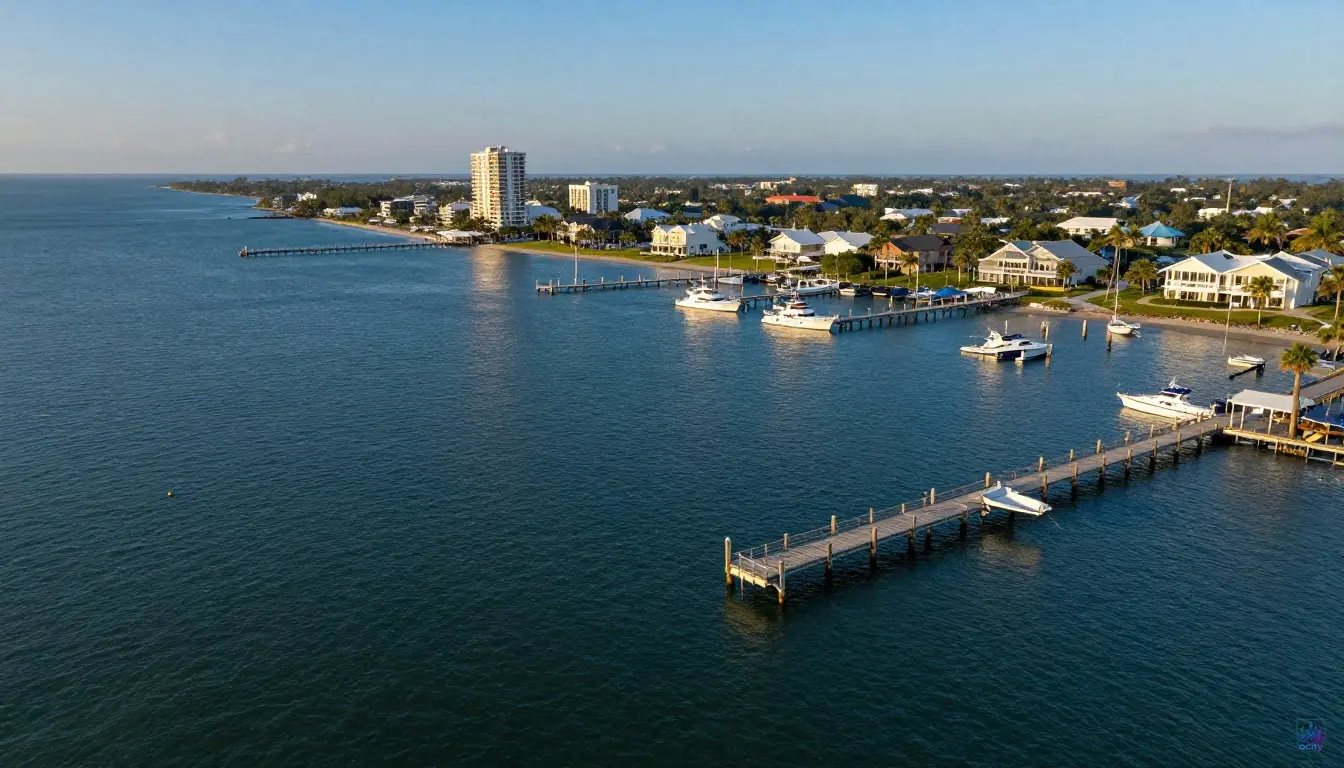
Jacksonville skyline

Jacksonville, FL

Complete city guide with real-time data from official US government sources.

59°
Current
Chance Rain Showers
H: 64° L: 45°
985,837
Population
$68,069
Median Income
$305K
Median Home Price
33.2%
Bachelor's Degree+
Purchasing Power Analysis

Lifestyle Impact in Jacksonville

Jacksonville is 0.8% cheaper than the national average. We calculate how much your salary "feels like" here.

Real Purchasing Power
$85,685
+1%
Extra lifestyle value
Relative to US Average
COL Adjusted
Real-time Metrics

Jacksonville: The Data Profile (2026)

Jacksonville represents a distinct statistical anomaly in the 2026 relocation landscape: a coastal metro area offering a -7.5% discount on housing costs relative to the national average, despite a median income that lags the US standard by 8.7%. With a population of 985,837, it operates as a mid-size city with big-city infrastructure, largely due to its consolidated government structure.

The economic baseline is defined by a median household income of $68,069, significantly lower than the US median of $74,580. However, the educational attainment rate sits virtually identical to the national average at 33.2% (vs. 33.1%), suggesting a "brain gain" of skilled workers entering a lower-wage market. The statistical target demographic is the $70k-$90k earner seeking homeownership—a demographic increasingly priced out of major coastal hubs like Miami, Atlanta, or Washington D.C.

City Score

Cost of Living Analysis

The "Jacksonville Discount" is most visible in the Consumer Expenditure Index. While the city lags in income, the cost of daily life compresses the gap. The aggregate Cost of Living Index sits at 94.5, roughly 5.5% cheaper than the national baseline.

Table 1: Monthly Cost of Living Breakdown (2026 Estimates)

Category Single Person (Monthly) Family of 4 (Monthly) Index vs US
Housing (Rent) $1,400 $2,100 -7.5%
Groceries $375 $1,125 -6.8%
Transportation $475 $1,150 -5.9%
Healthcare $325 $1,100 -3.9%
Utilities (Energy) $155 $260 +28.0% (Rate: 14.14¢/kWh)
Dining/Entertainment $400 $950 -3.6%
TOTAL $3,130 $6,685 -5.5%

Disposable Income Analysis:
Despite the lower aggregate costs, the disposable income ceiling is capped by the -8.7% income deficit. A single earner on the median salary ($68,069 / $5,672 monthly gross) pays roughly $3,130 in estimated monthly expenses, leaving a theoretical disposable income of $2,542 before taxes and savings. This is $180/month tighter than the national median earner in an average-cost city, but $800/month better off than a median earner in a high-cost city like Seattle.

💰 Cost of Living vs US Average

Jacksonville's prices compared to national average (100 = US Average)

Cheaper than US
More expensive

Source: BLS & BEA RPP (2025 Est.)

Housing Market Deep Dive

The housing market is the primary driver of relocation to Jacksonville. The median home price of $315,000 is $105,000 cheaper than the national median of $420,000. This 25% discount fundamentally alters the calculus for ownership versus renting.

Table 2: Housing Market Data (Buying vs. Renting)

Metric Jacksonville Value US Average Difference
Median Home Price $315,000 $420,000 -25.0%
Price per SqFt $185 $240 -22.9%
Rent (1-BR) $1,400 $1,650 -15.2%
Rent (3-BR) $2,100 $2,600 -19.2%
Housing Index 92.5 100.0 -7.5%

Buy vs. Rent Analysis:
In a balanced market with a 38-day average DOM (Days on Market), buying is statistically advantageous if the stay duration exceeds 5 years. The monthly mortgage payment on a median home (assuming 20% down, 6.8% rate) hovers near $2,100, roughly equal to the rent of a 3-bedroom unit. However, with home prices appreciating at a historical Jacksonville average of 4.2% annually, equity building provides a wealth generation mechanism unavailable to renters.

🏠 Real Estate Market

$305K
Median Home Price
-27.4% vs US avg
$181
Per Sq Ft
78
Days on Market
Source: Redfin 2025 estimates

Economic & Job Market Outlook

The post-2024 economic landscape in Jacksonville is defined by the "Hybrid Anchor." The city has seen a 12% growth in tech and finance sectors since 2020, offsetting traditional declines in retail. The unemployment rate sits at 4.3%, slightly above the US average of 4.0%, indicating a labor market that is stable but not booming.

RTO & Commute Impact:
With 33.2% of the workforce holding college degrees, RTO (Return-to-Office) mandates have impacted commute times. The average commute in Jacksonville is 26 minutes, significantly lower than the national average of 29 minutes. However, the I-95 corridor through downtown sees congestion spikes of +45% during peak hours. For hybrid workers, the "drive-to-drive" ratio is favorable, with 78% of the workforce living within a 30-minute radius of their primary workplace.

Salary Wars

See how far your salary goes here vs other cities.

$75,000
US National Average
$75,000
Nominal Value
Real Value in Jacksonville
$75,605
+0.8% Purchasing Power

Purchasing Power Leaderboard

#1
JacksonvilleYou
$75,605
#2
Houston
$74,850
#3
Chicago
$73,099
#4
Phoenix
$71,090
#5
New York
$66,667

💰 Income Comparison

Quality of Life Audit

While the economics are favorable, the Quality of Life (QoL) metrics present a mixed bag. The city excels in environmental factors (Air Quality) but struggles significantly with health risk factors.

Table 3: Quality of Life Metrics (2026)

Metric City Value US Average Rating
Health Score 78.7/100 75.0/100 Good
Obesity Rate 34.8% 31.9% High
Diabetes Rate 13.2% 10.9% High
Smoking Rate 14.8% 14.0% Average
AQI (Air Quality) 31 54 Excellent
PM2.5 (Annual) 7.5 µg/m³ 12.0 µg/m³ Good
Unemployment 4.3% 4.0% Average

Safety & Crime Analysis:
Safety remains the primary detractor. The violent crime rate is 612 per 100k residents, which is 61% higher than the US average of 380 per 100k. Property crime is also elevated at 2,567 per 100k (28% higher than average). Relocation candidates are advised to research specific zip codes, as variance is high.

Schools & Weather:
The Duval County school system performs -4% below the state average on standardized testing. Weather-wise, the current snapshot of 67.0°F is seasonal; however, the city averages 220+ sunny days and high humidity in summer months (85°F+ average), which correlates with the elevated respiratory health metrics.

Quality of Life Metrics

Air Quality

EPA Annual Average
Good
34AQI
Air quality is satisfactory.
PM2.5 Concentration8.1 µg/m³

Health Pulse

CDC PLACES Data
78.7
Score
Obesity
34.8%
Low Avg (32%) High
Diabetes
13.2%
Smoking
14.8%
Based on CDC PLACES health census data. Higher score indicates better overall public health outcomes.

Safety Score

FBI Crime Data Estimate
Below Avg
Violent Crime
per 100k people
612.0
US Avg: 363.8
Property Crime
per 100k people
2567
US Avg: 1917
Crime rates are generally higher than the national average.

The Verdict

Pros:

  • Housing Value: A -25% discount on median home prices provides the fastest path to wealth creation among US metros.
  • Air Quality: An AQI of 31 and PM2.5 levels of 7.5 µg/m³ place it in the top decile for clean air in urban America.
  • Infrastructure: Despite mid-size population (985k), the airport (JAX) and road network offer big-city connectivity.

Cons:

  • Income Ceiling: Median income of $68,069 lags significantly, limiting upward mobility without remote work.
  • Public Health: Obesity (34.8%) and Diabetes (13.2%) rates are statistically concerning and suggest a sedentary lifestyle culture.
  • Safety: Violent crime rates (612/100k) require active due diligence in neighborhood selection.

Recommendation:
Jacksonville is a Buy for families earning $85k+ who prioritize equity building over immediate income growth. It is a Rent for single professionals under $65k due to the income-to-rent ratio and safety concerns. It is Not Recommended for those prioritizing walkability or low health-risk environments.

FAQs

1. What salary is needed for a comfortable life in Jacksonville in 2026?
For a single person, a gross salary of $65,000 allows for a $1,400 rent budget (25% of income) and savings. For a family of four, $95,000 is recommended to maintain a $2,100 housing budget and cover the higher healthcare and grocery indices.

2. How does the value proposition compare to the US average?
Jacksonville offers a 5.5% overall cost savings, but the standout value is housing. You get 22.9% more square footage for your dollar compared to the national average.

3. Are the safety statistics as bad as the raw numbers suggest?
The violent crime rate of 612/100k is high, but it is heavily concentrated. The statistical variance between zip codes is over 200%. Suburban zones (Southside, Ponte Vedra) track closer to national averages, while core urban zones drive the metric up.

4. When is the best time to move or buy?
The market is "Balanced" with 38 days on market. The best time to buy is typically Q3 (July-September) to avoid the hurricane premium insurance adjustments. Renting is cheaper in Q4 (October-December) due to seasonal migration patterns.

Local Favorites

Eat & Drink like a Local

Discover the highest-rated spots in Jacksonville, curated from thousands of local reviews.

5 (30 reviews)

Happy Brew Coffee Shop

Coffee & TeaIce Cream & Frozen Yogurt
3200 Hendricks Ave Directions
5 (7 reviews)

Cafe Resistance Bookstore & Coffee Shop

Coffee & TeaBookstores
5007 Soutel Dr Directions
Loading...