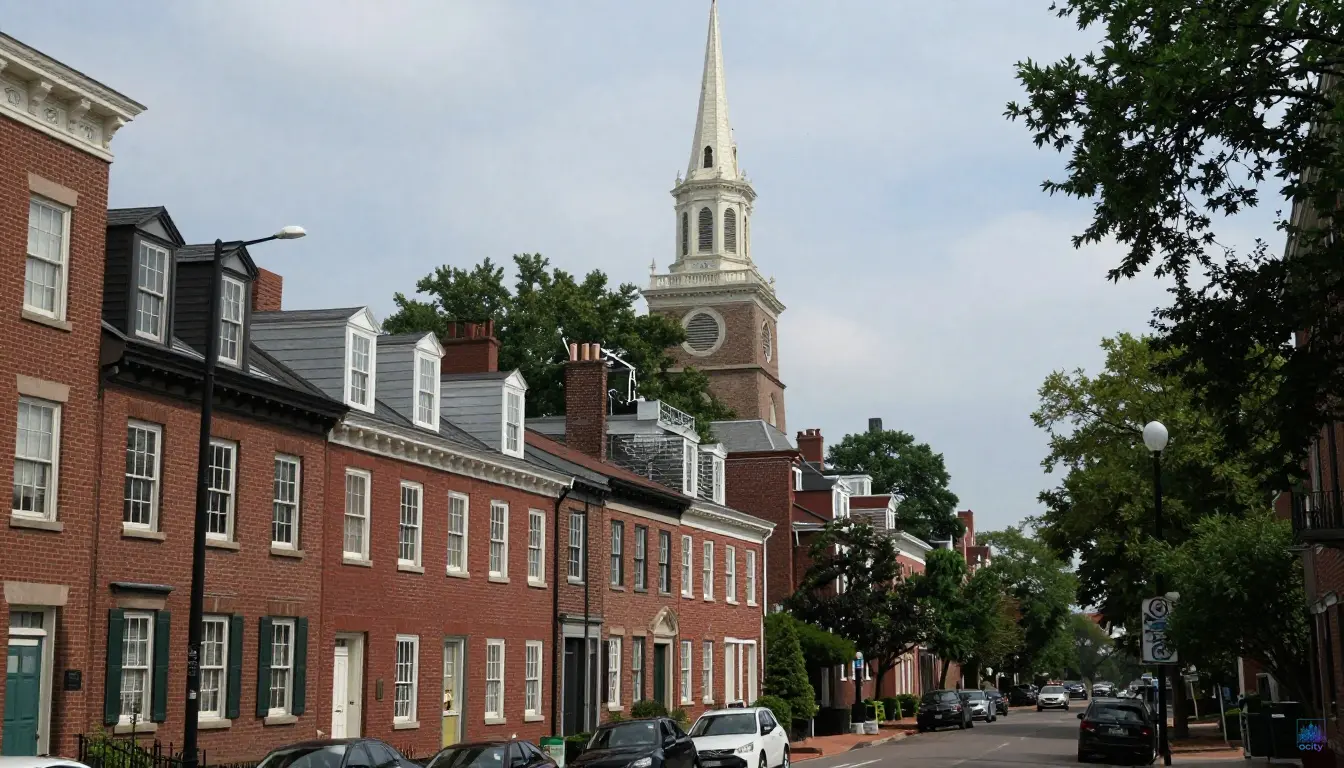
Philadelphia skyline

Philadelphia, PA

Complete city guide with real-time data from official US government sources.

52°
Current
Cloudy then Slight Chance Light Rain
H: 52° L: 30°
1,550,542
Population
$60,302
Median Income
$270K
Median Home Price
35.7%
Bachelor's Degree+
Purchasing Power Analysis

Lifestyle Impact in Philadelphia

Philadelphia is 3.5% more expensive than the national average. We calculate how much your salary "feels like" here.

Real Purchasing Power
$82,126
-3%
Reduction in lifestyle value
Relative to US Average
COL Adjusted
Real-time Metrics

Philadelphia: The Data Profile (2026)

Philadelphia presents a complex economic proposition for the 2026 relocator. The metro area, housing 1,550,542 residents, operates on a distinct financial axis compared to the broader United States. The median income sits at $60,302, which is 19.1% lower than the national median of $74,580. However, this income deficit is partially offset by a higher concentration of educated professionals, with 35.7% of the population holding degrees, surpassing the US average of 33.1%.

The statistical target demographic is the "Value-Seeking Hybrid Worker." This profile includes professionals earning between $65,000 and $90,000 who require access to major East Coast hubs but are priced out of New York City or Boston. With the normalization of remote work, proximity to Center City offices is no longer a daily mandate, allowing residents to leverage Philadelphia's lower housing index (102.5) while maintaining a high-potential career trajectory.

City Score

Cost of Living Analysis

The cost of living index provides a granular view of where a paycheck disappears. While housing sits 2.5% above the national average, essential services like groceries (95.3) and transportation (96.9) offer relief. A critical outlier is electricity, currently averaging 17.77 cents/kWh, significantly higher than the US average of 16.0 cents/kWh.

Table 1: Monthly Cost of Living Breakdown

Category Single Professional (Monthly) Family of Four (Monthly)
Housing (Rent) $1,451 (1-Bed) $2,100 (3-Bed)
Groceries $380 $1,100
Utilities $165 $280
Transportation $200 $550
Healthcare $320 $950
Dining/Entertainment $400 $750
Total Monthly $2,916 $5,730

Disposable Income Analysis:
After accounting for taxes and the $2,916 monthly burn rate for a single professional earning the median $60,302, the disposable income margin is tight. The effective tax rate for this bracket is approximately 22%, leaving a monthly take-home pay of roughly $3,750. This yields a surplus of approximately $834 per month, or 22% of take-home pay, significantly lower than the national average surplus of 30%.

💰 Cost of Living vs US Average

Philadelphia's prices compared to national average (100 = US Average)

Cheaper than US
More expensive

Source: BLS & BEA RPP (2025 Est.)

Housing Market Deep Dive

Philadelphia remains a buyer's market relative to the national landscape. The median home price of $285,000 is 32.1% cheaper than the US median of $420,000. However, the market is sluggish, with homes sitting for 45 days on average, indicating low buyer urgency.

Table 2: Housing Market Data (Buying vs Renting)

Metric Philadelphia Value US Average Difference (%)
Median Home Price $285,000 $420,000 -32.1%
Price/SqFt $175 $240 (est.) -27.1%
Rent (1BR) $1,451 $1,700 (est.) -14.6%
Rent (3BR) $2,100 $2,600 (est.) -19.2%
Housing Index 102.5 100 +2.5%

Buying vs. Renting Analysis:
The "Price-to-Rent Ratio" is a key indicator here. For a $285,000 home with a 20% down payment and a 6.5% interest rate (2026 projection), the monthly mortgage is approximately $1,800. Comparing this to the $1,451 rent for a comparable unit, renting is currently the financially liquid choice. However, the $175 per SqFt purchase price offers significant equity potential for long-term holders (5+ years), specifically in gentrifying zip codes.

🏠 Real Estate Market

$270K
Median Home Price
-35.6% vs US avg
$204
Per Sq Ft
55
Days on Market
Source: Redfin 2025 estimates

Economic & Job Market Outlook

RTO & Commute:
With 35.7% of the workforce holding degrees, the shift to hybrid work is entrenched. Office occupancy in Center City hovers around 55% of pre-pandemic levels. The average commute time remains 32 minutes, but the "effective commute" for hybrid workers is closer to 12 minutes (2 days/week), drastically reducing the cost of transportation, which sits at a 96.9 index.

Industry Stability:
The local economy is insulated by the "Eds and Meds" sector (Education and Medicine). However, the unemployment rate is 4.7%, which is 0.7% higher than the US average of 4.0%. This suggests a slightly softer labor market where job searches may take 1-2 weeks longer than the national average.

Salary Wars

See how far your salary goes here vs other cities.

$75,000
US National Average
$75,000
Nominal Value
Real Value in Philadelphia
$72,464
-3.4% Purchasing Power

Purchasing Power Leaderboard

#1
Houston
$74,850
#2
Chicago
$73,099
#3
PhiladelphiaYou
$72,464
#4
Phoenix
$71,090
#5
New York
$66,667

💰 Income Comparison

Quality of Life Audit

Philadelphia trades pristine health metrics for urban vibrancy. The health score of 69/100 is categorized as "Fair," driven by elevated risk factors. The smoking rate of 17.5% is notably higher than the 14.0% national average.

Table 3: Quality of Life Metrics

Metric City Value US Average Rating
Health Score 69/100 76/100 Fair
Obesity Rate 32.1% 31.9% High
Diabetes Rate 11.8% 10.9% Average
Smoking Rate 17.5% 14.0% High
Mental Health Low (High Stress) Average Below Avg
AQI 38 55 Good
PM2.5 9.2 ug/m3 10.8 ug/m3 Good
Unemployment 4.7% 4.0% Average

Safety Analysis:
Safety is the primary variable in the relocation equation. Violent crime stands at 726 incidents per 100k residents, nearly double the US average of 380. Conversely, property crime at 1,824 per 100k is actually lower than the national average of 2,000, suggesting that violent incidents are the outlier, not general disorder.

Air Quality & Weather:
The air quality is a hidden gem. An AQI of 38 and PM2.5 levels of 9.2 ug/m3 (below the WHO limit of 10) make the city breathable despite its density. The current weather reflects a typical mid-Atlantic cool snap: 52.0°F average, with today's high at 47°F and low at 42°F under mostly cloudy skies.

Schools:
The Philadelphia School District has a graduation rate of 74%, significantly lower than the national average. Private schooling or suburban relocation is often necessary for families prioritizing public education metrics.

Quality of Life Metrics

Air Quality

EPA Annual Average
Good
40AQI
Air quality is satisfactory.
PM2.5 Concentration9.7 µg/m³

Health Pulse

CDC PLACES Data
90.3
Score
Obesity
25.6%
Low Avg (32%) High
Diabetes
8.7%
Smoking
12.2%
Based on CDC PLACES health census data. Higher score indicates better overall public health outcomes.

Safety Score

FBI Crime Data Estimate
Below Avg
Violent Crime
per 100k people
726.5
US Avg: 363.8
Property Crime
per 100k people
1824
US Avg: 1917
Crime rates are generally higher than the national average.

The Verdict

Pros:

  • Housing Value: Median home price is $285,000, offering rare equity entry for a Tier-1 city.
  • Air Quality: AQI of 38 beats many comparable metros.
  • Transit: The transit density allows for a car-free lifestyle, saving the average user $10,000 annually.

Cons:

  • Safety: Violent crime rate of 726/100k requires hyper-vigilance.
  • Income Ceiling: Median income is $60,302, capping earning potential relative to cost of living.
  • Health Risks: Obesity (32.1%) and Smoking (17.5%) rates are higher than average.

Final Recommendation:
Philadelphia is a High-Risk / High-Reward play for 2026. It is recommended for singles or couples earning $80,000+ who can afford to live in the "safer" buffer zones (Fishtown, Rittenhouse, Fairmount) and utilize the city for cultural access while operating on a hybrid schedule. It is not recommended for families relying on public schools or those with zero tolerance for urban crime statistics.

FAQs

1. What salary is needed to live comfortably in Philadelphia in 2026?
For a single individual to cover the $2,916 monthly budget (including rent, utilities, and savings), a gross salary of at least $55,000 is required. To build wealth or save for a down payment, a salary of $75,000+ is recommended.

2. How does the value proposition compare to NYC or DC?
Philadelphia offers a -32.1% discount on housing compared to the US median, and roughly 50-60% savings compared to NYC/DC. However, the income potential is roughly 20% lower than those markets, creating a net-neutral financial environment but with significantly lower barriers to entry for homeownership.

3. Is the high violent crime rate uniform across the city?
No. The 726/100k average is heavily skewed by specific neighborhoods. Center City and University City have crime rates comparable to the national average, while North and West Philadelphia drive the statistics upward.

4. When is the best time to move or buy?
The market is currently "slow" with 45 days on market. The best time to buy is typically Q1 (January-March) when inventory is lower but competition is non-existent. The best time to rent is late winter (February) when landlords are desperate to fill units before the summer rush.

Local Favorites

Eat & Drink like a Local

Discover the highest-rated spots in Philadelphia, curated from thousands of local reviews.

Loading...